Rövid leírás:
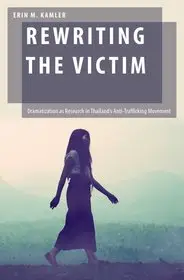
In this book, Erin Kamler brings together feminist international research with the writing, composing, and production of an original musical designed to critique the discourse about the trafficking of women in Thailand. Through this study, Kamler illuminates a theory and praxis that she calls Dramatization as Research, or DAR. Ultimately, Kamler shows how the arts can be used as a feminist communication intervention and a vehicle for understanding the cultural dimension of human rights.
Több
Hosszú leírás:
The international movement against the trafficking of women, which has gained momentum over the past two decades, is driven largely by the United States, in tandem with state governments and NGO workers. Feminist organizations have played a key role in carrying out anti-trafficking policies, but are increasingly divided over what those policies should look like. The primary divide exists between those feminists who want to abolish prostitution (as a key link to trafficking) and those who argue that what sex workers need is not to have their livelihoods taken away through paternalistic policies, but improved working conditions to alleviate the dangers associated with their work. A primary criticism of US NGO workers, well-intentioned as they may be, is that they misunderstand the cultural and economic conditions of the women they purport to help. This book provides a unique response to this misunderstanding. On one level it shows how this movement is, in fact, based on a Western mindset that problematizes women and puts its own interests before those of the women it is trying to help. But the project’s primary innovation is in the method that it develops to explore the conflict of cultural values that gives rise to the aforementioned debates: what Erin M. Kamler calls Dramatization as Research (DAR).
Through writing and producing „Land of Smiles,” a musical inspired by field research that includes over fifty interviews with female migrant laborers, sex workers, activists, NGO employees, and other members of the anti-trafficking movement, Kamler presents one of the dominant stories about human trafficking and critiques the discourse about the trafficking of women in Thailand. The book examines how the musical aimed to facilitate communication between stakeholders in the anti-trafficking movement in Thailand and prime a dialogue to explore the policies, practices, and outcomes of actions in this environment. Through researching, writing and producing the musical for the individuals on whose experiences the story of the musical is based, Kamler shows how the arts can be used as a feminist communication intervention and a vehicle for understanding the cultural dimension of human rights.
Her book exudes innovative interdisciplinarity, brilliantly deconstructing the chimerical binaries that engulf trafficking discourse while prodding policymakers to abandon ‘ideologically based policies’ (p. 99) in favour of holistic, evidence-based solutions
Több
Tartalomjegyzék:
Prologue
Introduction
Chapter 1: Theorizing Dramatization as Research
THE FIELDWORK PHASE
Chapter 2: Setting the Stage: National Identity and the Trafficking of Women in Thailand
Chapter 3: „Smart Raids” and the Victim-Versus-Criminal Narrative
Chapter 4: NGOs and the Rescue Narrative
Chapter 5: Community Based Organizations and the Narrative of Resistance
THE CREATIVE PHASE
Chapter 6: Building the Characters
Chapter 7: Finding the Story
Chapter 8: Embodiment
THE PRODUCTION PHASE
Chapter 9: Articulating NGO Narratives
Chapter 10: Restorative Justice and Reconciliation: NGO Subjectivities
Chapter 11: Articulating Migrant Narratives
Chapter 12: Recollection, Mourning and Witness: Migrant Subjectivities
Chapter 13: Articulating Artist Narratives
Chapter 14: Rupture and Hospitality: Artist Subjectivities
Conclusion: Dramatization as Research: A Feminist Communication Intervention
Appendices
References