Rövid leírás:
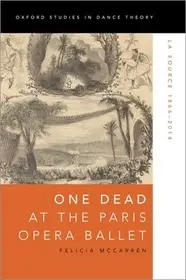
Based on research in the archives of the Paris Opera, One Dead at the Paris Opera Ballet illustrates the full and complex history of performances of the ballet The Source, contextualized by political events, colonial and post-colonial narratives, and staging theories of heredity and hybridity.
Több
Hosszú leírás:
In 1866, when the ballet La Source debuted, the public at the Paris Opera may have been content to dream about its setting in the verdant Caucasus, its exotic Circassians, veiled Georgians, and powerful Khan. Yet the ballet’s botany also played to a public thinking about ethnic and exotic others at the same time-and in the same ways-as they were thinking about plants. Along with these stereotypes, with a flower promising hybridity in a green ecology, and the death of the embodied Source recuperated as a force for regeneration, the ballet can be read as a fable of science and the performance as its demonstration. Programmed for the opening gala of the new Opera, the Palais Garnier, in 1875 the ballet reflected not so much a timeless Orient as timely colonial policy and engineering in North Africa, the management of water and women.
One Dead at the Paris Opera Ballet takes readers to four historic performances, over 150 years, showing how– through the sacrifice of a feminized Nature– La Source represented the biopolitics of sex and race, and the cosmopolitics of human and natural resources. Its 2011 reinvention at the Paris Opera, following the adoption of new legislation banning the veil in public spaces, might have staged gender and climate justice in sync with the Arab Spring, but opted instead for luxury and dream. Its 2014 reprise might have focused on decolonizing the stage or raising eco-consciousness, but exemplified the greater urgency attached to Islamist threat rather than imminent climate catastrophe, missing the ballet’s historic potential to make its audience think.
A lively journey deep into the Paris Opera houseand its dance ecologies that interrogates popular and elite culture in French society and its still unresolved postcolonial issues. McCarren brings into dialogue challenging ideas circulating on both sides of the Atlantic and suggests the possibility of more inclusive and more ethical dance worlds.
Több
Tartalomjegyzék:
Acknowledgments
Chapter 1: Veil, Flower, and Dagger: Gender, Ecology and Orientalism in La Source
Chapter 2: The natural history and cultural history of La Source: 1866
Chapter 3: La Source after Suez: 1875
Chapter 4: Not the Arab Spring: La Source, 2011
Chapter 5: Resources: La Source, 2014
Bibliography


