Rövid leírás:
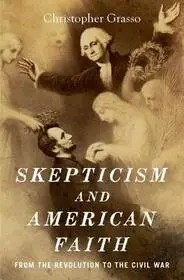
Between the Revolution and the Civil War, the dialogue of religious skepticism and faith profoundly shaped America. Although usually rendered nearly invisible, skepticism touched — and sometimes transformed — more lives than might be expected from standard accounts. This book examines Americans wrestling with faith and doubt as they tried to make sense of their world.
Több
Hosszú leírás:
Between the American Revolution and the Civil War, the dialogue of religious skepticism and faith shaped struggles over the place of religion in politics in the Revolutionary era. It then produced different visions of knowledge and education in an „enlightened” society. It fueled social reform in an era of economic transformation, territorial expansion, and social change. Ultimately, it molded the making and eventual unmaking of American nationalism.
Yet religious skepticism has been rendered nearly invisible by the stories usually told about American religious history, which often stress the in-your-face evangelicalism of the era, or the „secularization” said to be happening behind people’s backs, or assume that skepticism was for intellectuals while ordinary people who stayed away from church were merely indifferent. Certainly the efforts of small groups of vocal „infidels” or „freethinkers” were dwarfed by the legions conducting religious revivals, creating missions and moral reform societies, distributing Bibles and Christian tracts, and building churches across the land. Even if few Americans publicly challenged Christian truth claims, however, many more quietly doubted, and religious skepticism touched — and in some cases transformed — more lives than we might expect from standard accounts. Commentators considered religious doubt to be a persistent problem, too, not because there were armies of skeptics marching in the streets but because they believed that skeptical challenges to the grounds of faith — the Bible, the church, and personal experience — threatened the foundations of American society. Skepticism and American Faith examines the ways that Americans — ministers, merchants, and mystics; physicians, schoolteachers, and feminists; self-help writers, slaveholders, shoemakers, and soldiers — wrestled with faith and doubt as they lived their daily lives and tried to make sense of their world.
An astonishing work of scholarship exploring the relationship between skepticism and faith from the late eighteenth century to the years just after the Civil War….Through a number of intellectual portraits, readers are guided from the deism of the 1780s through the growing attempts to stifle free thought and inquiry in a republic seized with all sorts of reformist fervor and rapidly evolving political and social institutions in the early to mid-nineteenth century…. All of the individuals discussed have complicated spiritual journeys that are carefully delineated….We are shown the little-discussed but important rise of skepticism among the enslaved population….Grasso moves deftly over the persistence of honest dissent, always fully sensitive to the complexity of skepticism.
Több
Tartalomjegyzék:
Note on Sources
Introduction
I: Revolutions, 1775-1815
1. Deist Hero, Deist Monster: On Religious Common Sense in the Wake of the American Revolution
2. Souls Rising: The Authority of the Inner Witness, and Its Limits
3. Instituting Skepticism: The Emergence of Organized Deism
4. Instituting Skepticism: Contention, Endurance, and Invisibility
II. Enlightenments, 1790-1845
5. Skeptical Enlightenment: An American Education in Jeffersonian Pennsylvania
6. Christian Enlightenment: Eastern Cities and the Great West
7. Christian Enlightenment: Faith into Practice in Marion, Missouri
8. Revelation and Reason: New Englanders in the Early Nineteenth Century
III. Reforms, 1820-1850
9. Faith in Reform: Remaking Society, Body, and Soul
10. Infidels, Protestants, and Catholics: Religion and Reform in Boston
11. Converting Skeptics: Infidel and Protestant Economies
IV. Sacred Causes, 1830-1865
12. Political Hermeneutics: Nullifying the Bible and Consolidating Proslavery Christianity
13. Lived Experience and the Sacred Cause: Faith, Skepticism, and Civil War
Epilogue: Death and Politics
Appendix: Grounds of Faith and Modes of Skepticism
Acknowledgments
Notes
References
Index